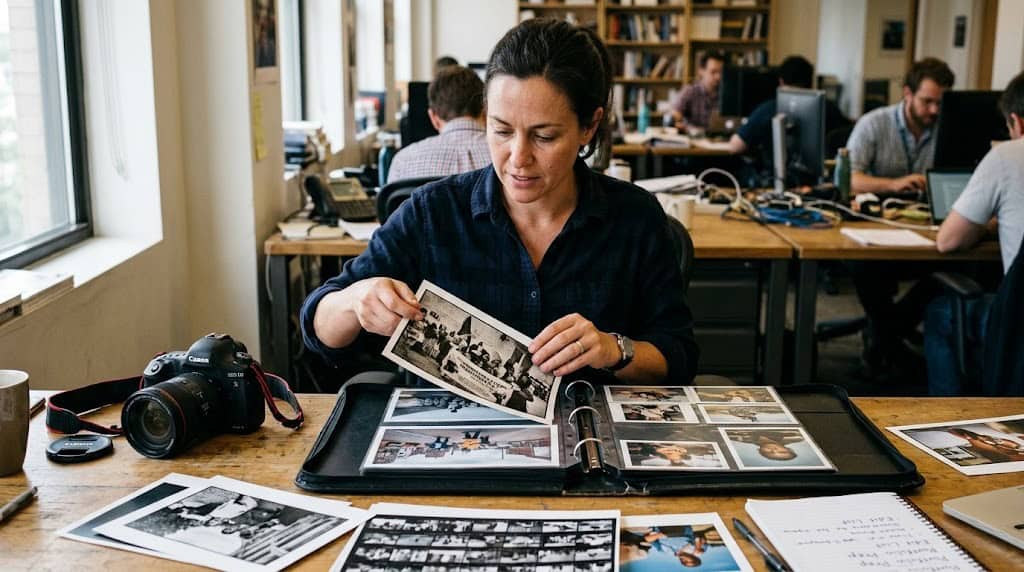
A strong photojournalism portfolio is not just a collection of your best images—it is a carefully edited visual argument that proves you can tell real-world stories with clarity, consistency, and emotional impact. Editors don’t have time to guess your abilities; they decide within seconds whether your work demonstrates professional readiness, editorial judgment, and narrative skill.
If you want to get hired in today’s competitive media landscape, your portfolio must do three things exceptionally well: show strong storytelling, demonstrate technical control, and match the expectations of the publications or agencies you’re targeting. This guide breaks down exactly how to build a portfolio that does all three.
Understanding What Editors Actually Look For
Before selecting images or building a website, you need to understand the mindset of photo editors. They are not looking for “pretty pictures.” They are looking for photographers who can reliably produce publishable visual stories under real-world constraints.
Key qualities editors evaluate
Editors typically assess:
- Narrative strength: Does your work tell a clear story?
- Consistency: Are your images cohesive in style and quality?
- Access and trust: Do you get close enough to real events and people?
- Technical competence: Are exposure, focus, composition, and timing reliable?
- Editorial relevance: Would your work fit their publication?
A common mistake is treating a portfolio like an art gallery. Photojournalism is not about isolated masterpieces; it’s about sustained storytelling ability.
Selecting the Right Images for Your Portfolio
One of the most difficult parts of building a portfolio is choosing what to include—and what to leave out. More images do not mean a stronger portfolio. In fact, overloading your portfolio weakens it.
Prioritize storytelling over individual shots
Instead of asking, “Is this my best photo?” ask:
- Does this image move the story forward?
- Does it add context or emotion?
- Does it show a different angle or moment?
Every image should serve a purpose within a larger narrative.
Aim for quality over quantity
A strong portfolio typically includes:
- 3–6 cohesive photo stories (essays)
- 10–20 images per story
- A total of 40–80 images overall (depending on depth and platform)
Editors prefer fewer strong images over dozens of average ones.
Remove redundancy aggressively
If multiple images show the same:
- Expression
- Action
- Composition
- Lighting situation
…you should only keep the strongest version. Redundancy is one of the fastest ways to lose editorial interest.
Building Strong Photo Essays (The Core of Your Portfolio)
A compelling photojournalism portfolio is built around photo essays, not standalone images. Each essay should demonstrate your ability to cover a subject thoroughly and narratively.
Choose stories with real narrative potential
Strong photo essays often come from:
- Social issues (housing, migration, inequality)
- Local communities or subcultures
- Political events or protests
- Sports and human competition
- Environmental change
- Everyday life with strong human elements
Avoid vague themes like “life in the city” unless you have a very specific angle.
What makes a strong photo story
A strong essay usually includes:
- A clear beginning, middle, and end
- Emotional variation (not just similar moods)
- A mix of wide, medium, and close-up shots
- Environmental context and intimate detail
- Human interaction or conflict
Sequencing Images to Tell a Cohesive Visual Story
Sequencing is where many portfolios fail. Even strong individual images can feel weak if they are not arranged in a logical and emotional flow.
Start with a strong establishing image
Your first image should:
- Set the scene
- Introduce the subject
- Create visual interest immediately
This is your hook. Editors often decide within the first few images whether to continue viewing.
Build narrative progression
A well-sequenced story often follows this structure:
- Establishing shot – where and what is happening
- Context images – environment, setting, atmosphere
- Character introduction – key subjects
- Action or conflict – main event or tension
- Detail shots – emotional or symbolic elements
- Resolution or closing image – reflective or concluding moment
This structure is not rigid, but it ensures clarity and flow.
Use visual rhythm
Avoid placing similar images next to each other. Instead:
- Alternate wide and tight compositions
- Mix action with quiet moments
- Vary light and tone
Think of sequencing like editing a film: pacing matters as much as content.
End with intention
Your final image should leave an impression. It might be:
- Emotionally reflective
- Visually powerful
- Symbolic of the story’s theme
A weak ending can undermine an otherwise strong essay.
Editing Your Portfolio Like a Photo Editor
Many photographers struggle because they edit like creators, not curators. A portfolio requires ruthless editing.
Be objective, not sentimental
If you find yourself saying:
- “I was there for this shot”
- “This was difficult to capture”
- “I like this moment”
…those are not editorial reasons to keep an image.
Instead, evaluate:
- Is this image necessary?
- Does it improve the story?
- Is it stronger than alternatives?
If the answer is no, remove it.
Seek external feedback
Before finalizing your portfolio:
- Show it to other photographers
- Ask for blunt feedback from editors if possible
- Pay attention to patterns in criticism
If multiple people question the same image, it likely does not belong.
Tailoring Your Portfolio for Different Editors
A common mistake is using a single generic portfolio for every application. Editors at different publications have different expectations.
Research the publication
Before submitting, study:
- The type of stories they publish
- Their visual style (gritty, clean, documentary, etc.)
- Their geographic and thematic focus
Match your strongest relevant work
You do not need to include everything you’ve ever shot. Instead:
- Select stories that align with their coverage areas
- Highlight similar tone and subject matter
- Remove unrelated or weaker essays
A targeted portfolio is far more effective than a broad one.
Create modular portfolios
Ideally, maintain:
- A master portfolio (all best work)
- A documentary-focused version
- A news/event-focused version
- A long-form essay version
This allows quick customization depending on the opportunity.
Presentation Matters: Online vs. PDF Portfolios
How you present your work is almost as important as the work itself.
Online portfolios
An online portfolio should:
- Load quickly
- Be easy to navigate
- Prioritize full-screen image viewing
- Avoid clutter and excessive text
Platforms like personal websites are preferred because they give you control over sequencing and presentation.
PDF portfolios
PDFs are still widely used for submissions. They should:
- Be lightweight (under 20–30 MB ideally)
- Follow a clear narrative structure
- Include captions only when necessary
- Be formatted for easy scrolling
Avoid decorative layouts that distract from the images.
Writing Captions That Add Value
Captions are not optional in photojournalism—they provide essential context. However, they should not overpower the image.
What good captions include
A strong caption typically answers:
- Who is in the image?
- What is happening?
- Where and when was it taken?
- Why is it relevant?
Keep captions concise but informative.
Avoid editorializing
Do not interpret the image for the viewer. For example, avoid:
- “This powerful moment shows hope and resilience…”
Instead, stick to facts and context.
Common Portfolio Mistakes That Get Photographers Rejected
Even talented photographers lose opportunities because of avoidable mistakes.
Overcrowding the portfolio
Too many images dilute impact. Editors want clarity, not volume.
Mixing styles without cohesion
Jumping between unrelated topics, tones, or editing styles makes your work feel unfocused.
Weak sequencing
Random image order destroys narrative flow.
Ignoring weaker images in strong stories
Even one weak image can reduce the perceived quality of an entire essay.
Over-editing or inconsistent post-processing
Inconsistent color grading or heavy editing can signal lack of professionalism.
Building Long-Term Portfolio Strength
A strong portfolio is not built in a weekend—it evolves over time.
Continuously shoot in stories, not singles
Instead of chasing individual images, focus on:
- Developing long-form projects
- Returning to subjects over time
- Deepening access and relationships
Update regularly
Remove older work that no longer reflects your current skill level. A portfolio should represent your present capabilities, not your entire history.
Track what gets attention
Pay attention to:
- Which images get published
- Which stories receive feedback
- Which projects resonate with editors
Use this information to guide future work.
Final Thoughts
A strong photojournalism portfolio is not defined by how many good images you have, but by how effectively those images work together to tell meaningful stories. Editors are not looking for randomness or artistic experimentation without direction—they are looking for photographers who understand narrative, discipline, and editorial intent.
If you focus on selecting only purposeful images, structuring cohesive photo essays, sequencing them with intention, and tailoring your portfolio to specific audiences, you dramatically increase your chances of getting hired.
Your portfolio should answer one simple question without hesitation:
Can this photographer consistently tell important stories in a way that fits our publication?
If the answer is yes, you are already ahead of most applicants.